UK Retailer Symposium - Superlist Environment Europe 2026
Following the launch of the Superlist Environment Europe 2026 earlier this year, we partnered with Madre Brava, ProVeg International, WWF-UK, and Changing Markets to host the Retail’s Role in Dietary Shift Symposium in London on 21st May 2026.
How can UK supermarkets align their climate plans with the Paris Agreement while shifting their product offerings toward more plant-rich diets? In Europe, Dutch and German chains are taking the lead. UK retailers have set goals but have yet to show significant emissions reductions or clear roadmaps to achieve them.
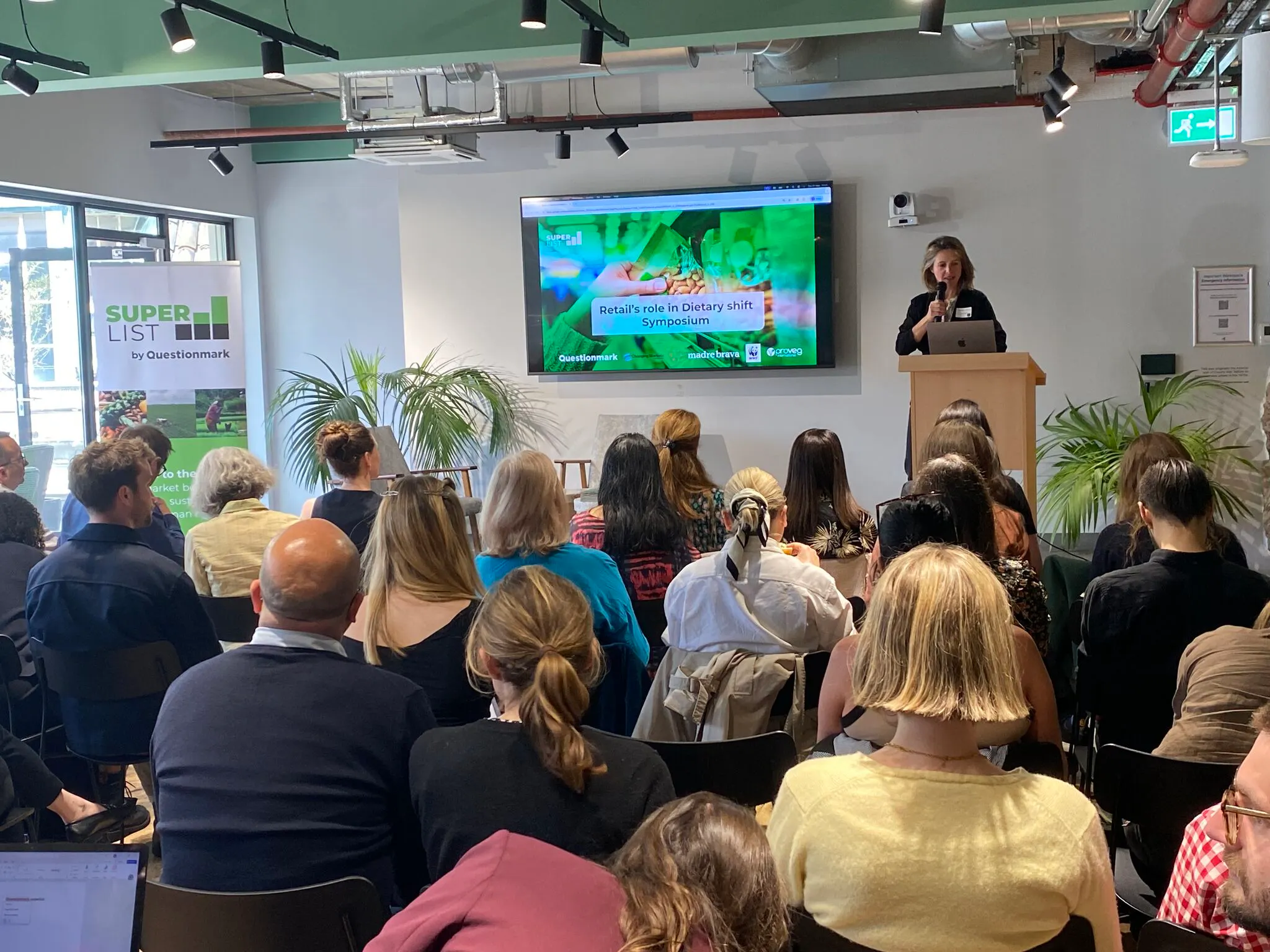
European insights & trends: a race to responsible retail
Charlotte Linnebank (Director, Questionmark), opened the symposium by emphasising the food system as the most critical lever for achieving a liveable climate, thriving biodiversity, a fair society, and public health.
Insights from the Superlist Environment Europe 2026, with the focus on the UK:
- Sainsbury's and Tesco have established clear near-term climate reduction targets in their climate plans and are actively reporting their protein splits.
- Both retailers report the protein split in protein-rich food groups.
- Asda and Tesco demonstrate a strong ambition to grow plant-based proteins, highlighting a valuable opportunity to explicitly transition the balance from animal to plant-based proteins in their sales.
"Supermarkets as industry gatekeepers, wield immense power and must drive the "race to the top" through competition and collaborative action."
— Charlotte Linnebank, Questionmark
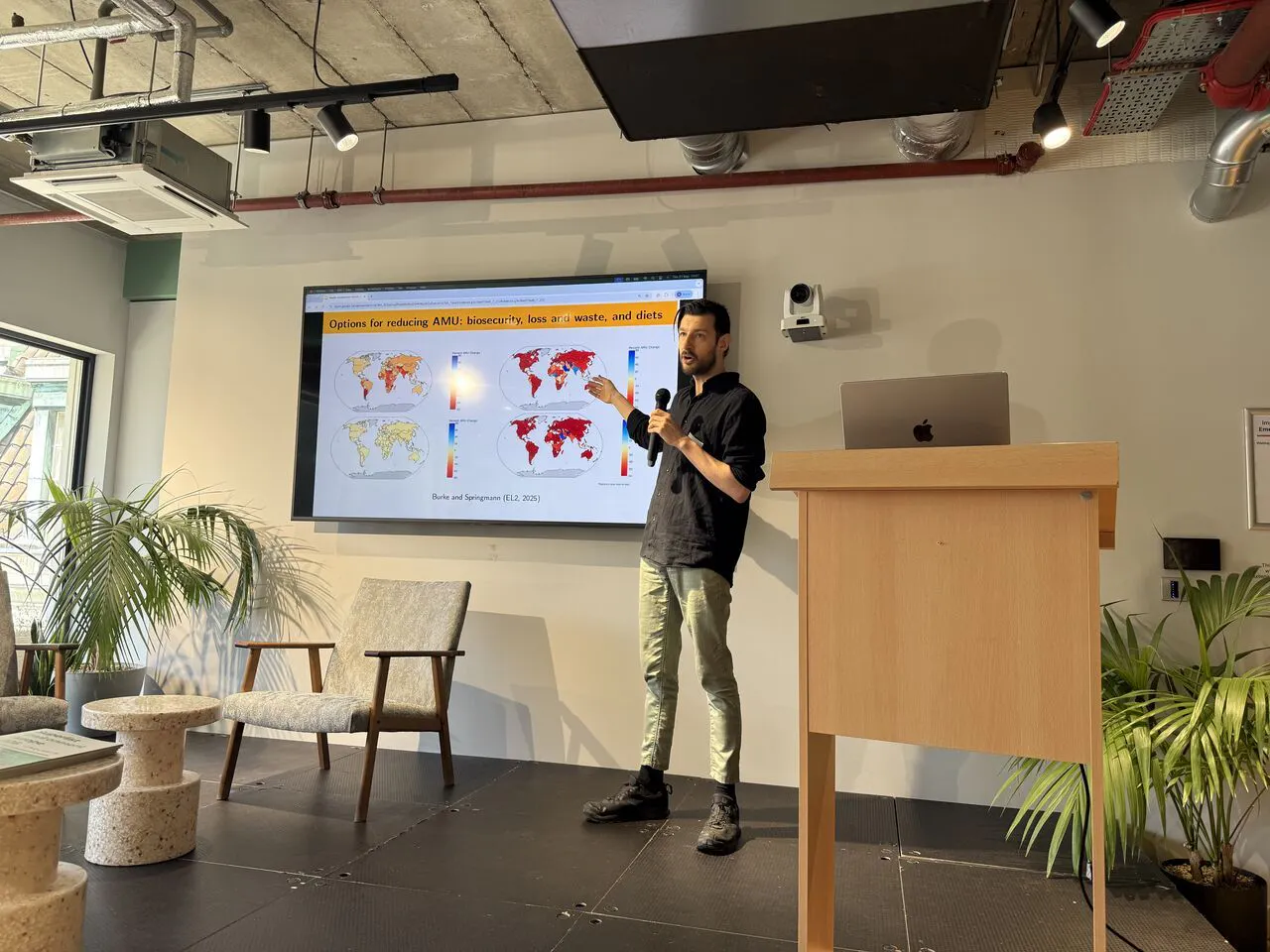
Science & Systemic change - Linking EAT-Lancet to UK context
Dr. Marco Springmann (EAT-Lancet) presented stark evidence linking current global dietary patterns to escalating environmental and public health crises, noting that the food system drives one-third of global greenhouse emissions, while poor diets contribute to 1 in 4 deaths worldwide.
To address this, the EAT-Lancet 2.0 report expanded its scientific framework from five to nine planetary boundaries, providing a more comprehensive assessment of the environmental limits within which healthy food systems must operate. The data underscores a clear conclusion: safeguarding both human health and environmental stability will require a significant rebalancing of current diets, particularly through reducing excessive consumption of animal-sourced foods and increasing plant-based alternatives.
“Inaction is not an option. We will cross planetary boundaries without these actions.”
— Marco Springmann, EAT-Lancet
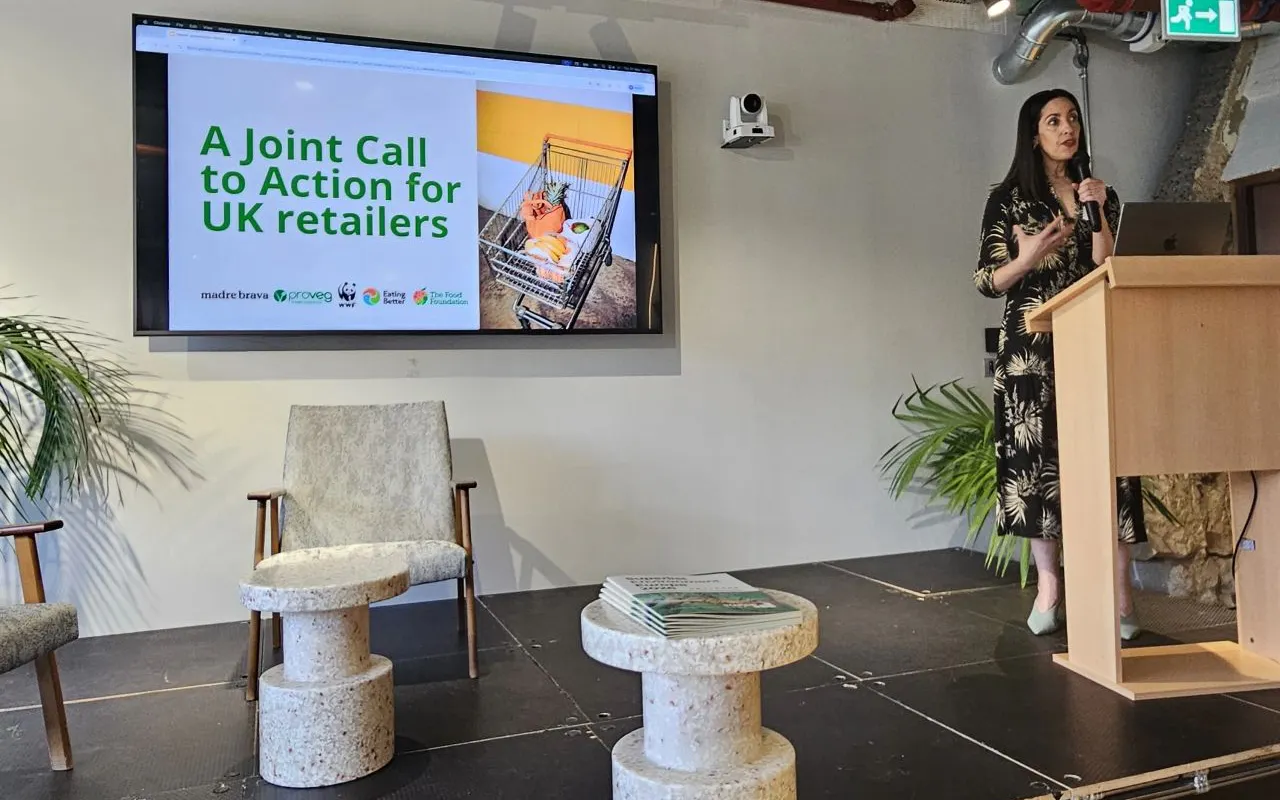
Joint call to action for UK retailers
Because 95% of UK groceries are concentrated across just 11 supermarkets, these businesses hold an unparalleled responsibility to reshape supply chains and consumer habits. Their decisions have the power to accelerate the transition towards healthier, more sustainable diets at scale.
The Core Ask for UK Retailers is twofold:
- Set targets to increase the ratio of plant to animal-source food sales.
- Publicly report progress on an annual basis.
Together, these actions would create greater transparency, accountability, and momentum for sector-wide change.
“By working together - retail and civil society - we send a powerful, unified signal about what good looks like. And that signal matters. It helps align expectations, reduce uncertainty, and create a level playing field so the whole sector moves in the same direction.”
— Sara Ayech, Madre Brava
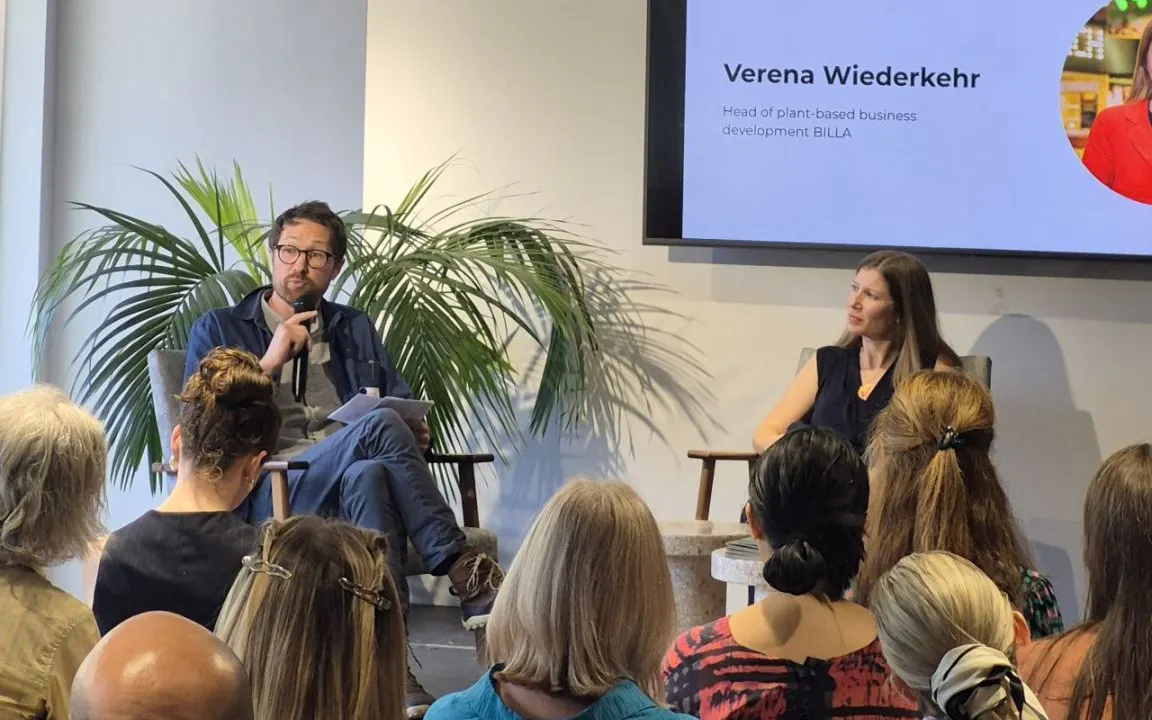
Retail practice: What’s working
Verena Wiederkehr, who leads the plant-based business development at BILLA within the REWE Group, shared how BILLA Austria has a dedicated protein diversification strategy aimed at reducing Scope 3 emissions through increased plant-based sales. The strategy is built around three key pillars:
- Quality & taste: focused on direct counterparts, but also standalone - like tofu and tempeh
- Price: price promise - same base price as animal products or cheaper
- Communication: a new communication strategy ensures that as products evolve the communications evolve alongside.
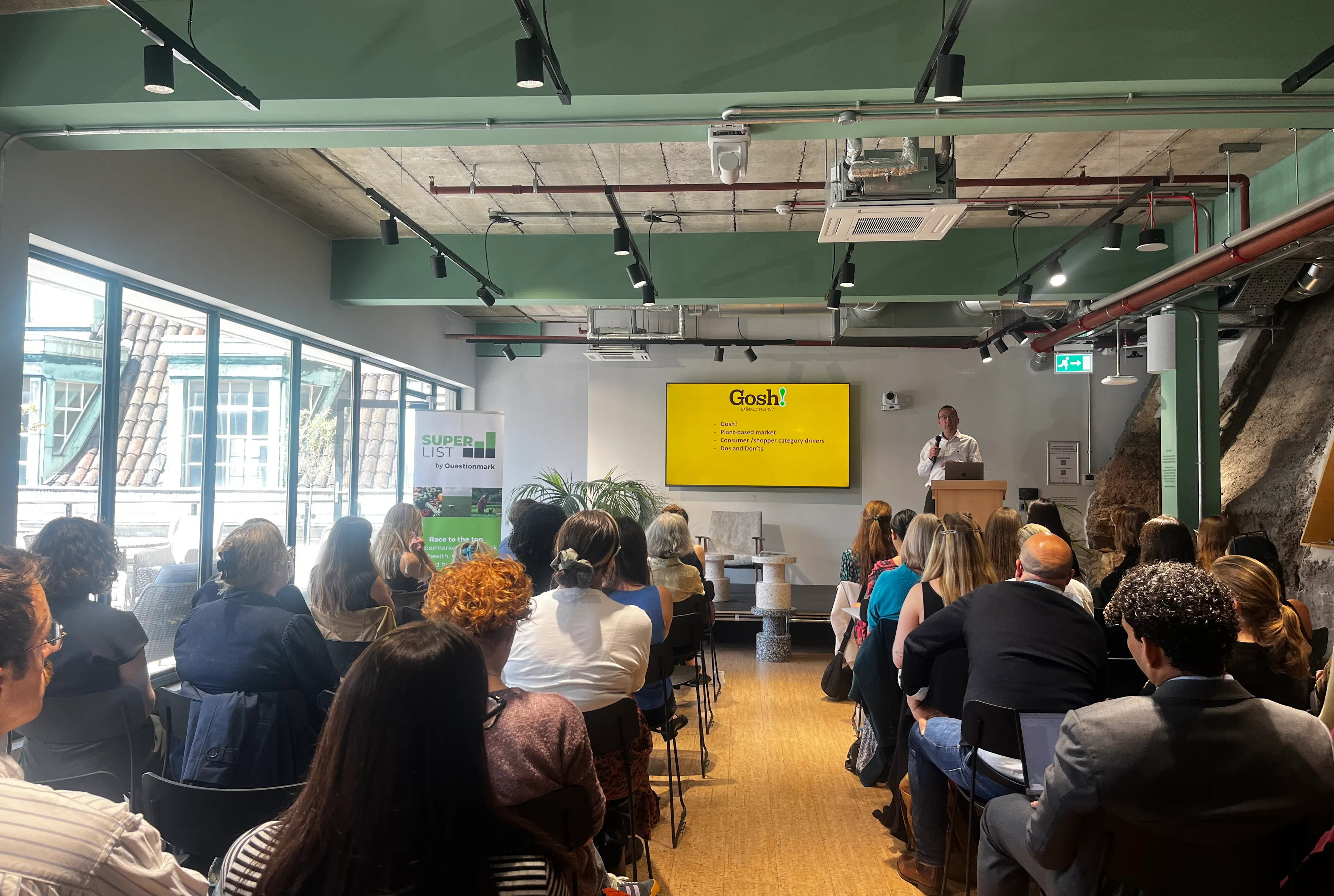
Opportunities for the plant based category
Jason Belmont, Managing Director at GOSH! Food, shared his perspectives on the opportunities within the plant-based category and the key factors driving long-term consumer engagement. He highlighted do’s and don’ts for brands and retailers looking to grow the category successfully. Among the most important principles were creating products that excite the senses, maintaining authenticity and naturalness, and aligning with consumers’ increasing desire for healthier food choices for themselves and their families. He concluded by emphasising the importance of a consumer-first approach.